AI Isn't a Tool. It's a Team You Have to Design.
Six months ago I called this 'using AI.' I don't anymore.
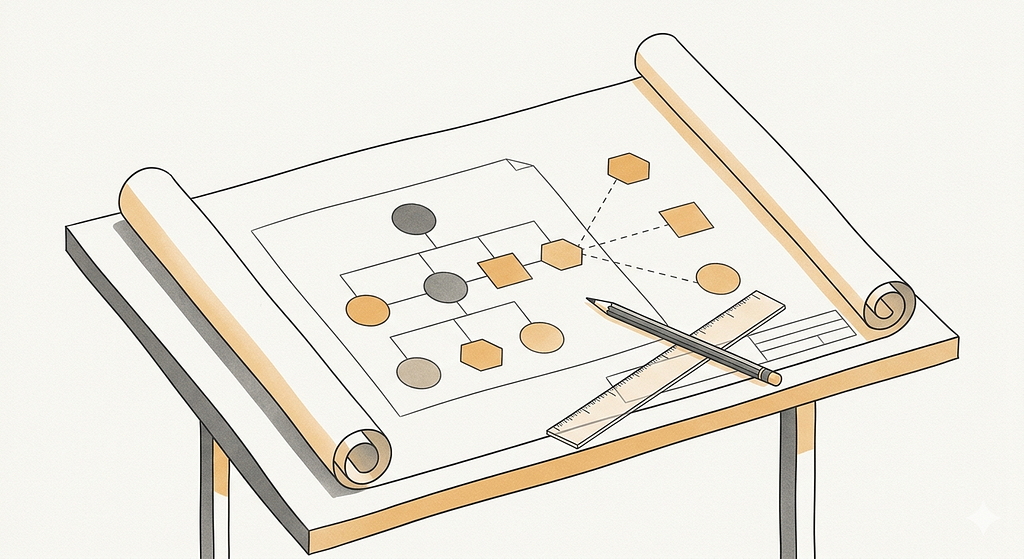
Six months ago I called this “using AI.” I don’t anymore. The AI is my Chief of Staff. There is a team behind it. I run it like I would a human team.
The chatbot trap
Most people I talk to are using AI seriously. They are in Claude or ChatGPT or Cursor for hours. They iterate. They push back. They get real work done. And the tool does remember some of it. A preference here. A fact there. However, it’s whatever the vendor decided to keep. When the session gets long, the tool quietly “compacts” the history and decides for them what was worth keeping — for token use/cost reasons.
That is the trap. Not that the AI forgets. That they are taking whatever persistence the tool hands them and calling it good. They have not designed what it should know about them, what it should carry across projects, what it should never forget, what it should keep separate. The shape of the memory is the vendor’s shape, not theirs.
It feels like a tool because they let it stay one.
The moves that broke it
I started designing it differently. Not all at once. Each move felt small at the time. Together they changed what I was working with and more importantly HOW I work. And it runs locally on my machine, not in the cloud. On purpose. Security posture.
First I wrote rules. Not preferences. Rules. How to talk to me. When to ask before acting. What to never touch without confirmation. What counts as approval and what does not. That layer alone changed the posture. I was no longer typing into a smart stranger. I was working with something that knew the contract.
Then I built persistent memory across sessions. Not the vendor’s default. My own files, organized by topic, loaded when relevant. Things it should know about me. Things it should know about each project. Feedback I had given it that should not require giving twice.
Then decision logs. When we settled an architectural call or a vendor pick, it got written down with the reasoning, not just the answer. Next time the question came up, the answer came with its history.
Then open threads. The half-finished conversations, the parked ideas, the things waiting on someone else. Each project carries its own state. When I open a new session and say “working on AA,” the threads are already loaded.
Then named workflows. The recurring shapes of my day got their own verbs. Start of day. End of day. Save state before context fills. Process the inbox. Debrief a meeting. The team runs them without me asking. Knowledge became reflex.
Then an audit trail. Everything non-trivial logged. Approved or auto. Reversible or not. So I can see what got done while I was not watching, and so it cannot quietly drift past what I authorized.
Each move took it further from chatbot. The last one is the one that made it daily.
When it stopped feeling like a tool
The shape of my day changed as a result.
I do not start a session and brief the AI on what we are working on. I say “working on AA” and the context is already there. The threads, the people, the open questions, the rules for that project. Same for Rocket Vodka. Same for personal. The AI walks into the room already informed — and tells me what’s important to boot.
It also stopped living at my desk. A Telegram bot on a small server runs in my pocket. Voice memo at the bar when an idea hits and the transcript is processed realtime. A quick todo while on a walk. A question from the airport. Brief prep for my flight. And use remote-control when I want to actually steer the team from my phone, not just log a note. The team is reachable. It does not need me at a keyboard to be useful.
That is when it stopped feeling like a tool. Tools sit on shelves. Teams travel with you.
AI isn’t a tool. It’s a team you have to design.
How the team runs
My main AI interface is my Chief of Staff. The Chief of Staff runs the team.
I do not type requests and wait. I brief. Parameters, goals, what good looks like, what is off-limits, what to ask before acting. The COS takes the brief and dispatches.
Research and synthesis on a topic. Build or enhance a project, or the harness itself. Fix a specific issue. The COS picks the shape, picks the models, picks how many agents. I do not pick. The COS picks.
The whole thing runs while I am doing something else. I am at dinner. I am on a call. I am walking. The team is working. When I come back, the COS hands me what is done, what is waiting on me, and what got stuck. I make the calls only on the things that need me. The rest already moved, because the team knows what I expect.
Employee Agents and Contractor Agents
There is one more move. I thought of the employee versus contractor model and carried that over. The team I just described is the employee side. The COS, the sub-agents, the feature teams. Deep context. In the office. They see how the business runs. I call them “Employee Agents”.
Then there are “Contractor Agents”. External services I bring in for a specific job. Not part of the core team. Not in the room with my data. I treat them like contractors under NDA. They get a brief. They get a worksite. They never get the office. Their own keys, scoped to the job. When the job is done they go away.
The whole system has guardrails. Automated checks that fire on specific events. Files that cannot be overwritten without confirmation. A protocol that runs every time a session starts. An automatic save before the context fills. The discipline is not me remembering to be careful. The discipline is in the system.
That is governance. The same shape that runs a company, scaled down to one operator. Roles. Permissions. Audit. Escalation. Not because I am paranoid. Because anything this powerful needs an org structure around it. Otherwise the team runs you.
What design failure looks like
The news this week is Meta. The most aggressive live experiment in AI-era org redesign. A new internal team employees are calling the Draft. Roughly fifty workers reporting to each manager. A program harvesting employee keystrokes to train the AI tools that come next. The CTO on the mood: “There are a tremendous number of employees feeling anxieties about their futures. It’s all bad.”
The structural design is real. What is visibly anxious is the human dimension. The NYT framed it: tech workers, it is becoming clear, have been creating their own AI replacements.
The design counted the work. It has not yet counted the operator. The fix is not more AI. The fix is designing the team, with the people who run it counted in.
AI isn’t a tool. It’s a team you have to design.
Also published on Medium ↗