Most PMs Quit AI Too Soon. Reach the 4-Hour Mark.
Marty Cagan ('PM guru') said two important things over the last 10 days.
Marty Cagan (“PM guru”) said two important things over the last 10 days.
The first: as the cost of product delivery keeps dropping, the bottleneck moves to product discovery. The competitive advantage shifts to whether what you ship was worth shipping in the first place.
The second: the product manager’s job is product sense. Building and testing prototypes to learn. Bringing deep knowledge of the customer, the data, the business, to shape what is actually worth building.
He is right on both.
Build-to-learn only compounds when someone owns what “good enough to keep” means. That ownership is the product sense he is describing. The question is how a PM actually develops it, especially with AI in the mix.
His answer: AI as a 7×24 coach, configured with company context. That part is real leverage. I have been running a version of this for over a year.
And there is a piece of the loop it does not close.
Most PMs who try AI as a coach do what you would expect. They open Claude or ChatGPT. They type something at it. They get a result back. Then they have a feeling about whether it is any good. The result is sometimes useful. The feeling is usually wrong.
Judgment gets built by reps (or experience), and twenty minutes of asking does not produce reps.
The product sense he is talking about, the kind that owns “good enough to keep,” gets built somewhere past the four-hour mark. On something that matters to you, with your own messy data, with your own deadline breathing down your neck. With your work going in front of peers who will tell you what is actually wrong with it.
Most PMs do not get there, because nothing in their system forces them to.
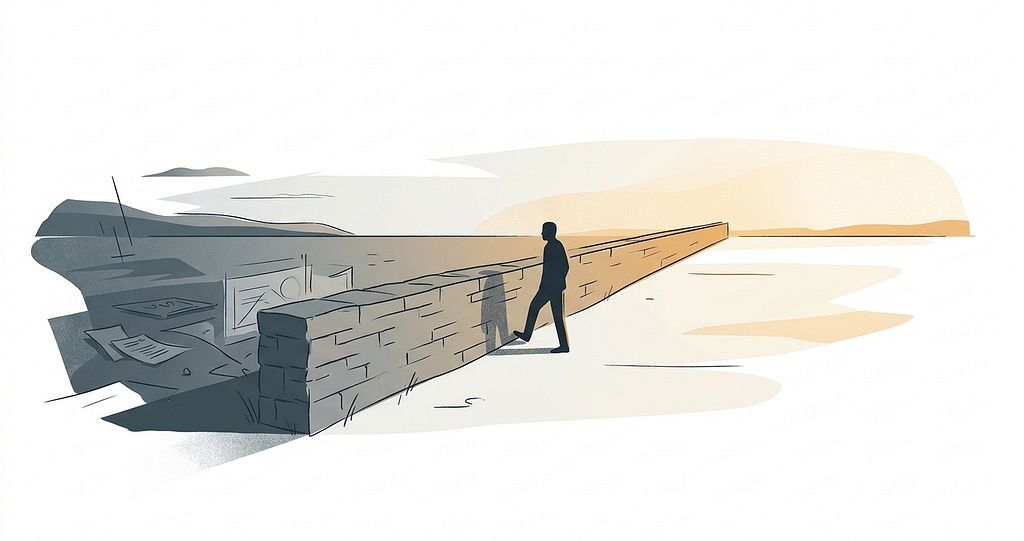
Zoom out. This is also what stalls most org-level AI adoption. You bought the tools. You ran the class. The pilot was supposed to be live by now. The build side got faster, but the team is still hesitating, still evaluating, still saying “we are not sure yet.” Worse, building things they shouldn’t. The wall is hour four, the one nobody made them cross.
The classroom version skips this. The 2-day class skips it. The certification skips it. Even the 7×24 AI coach skips it. They all hand you the input.
None of them make you spend the four hours. None of them put your work in front of peers tomorrow morning — trial by fire basically.
The mechanism that closes the loop per Marty: Learn one, Do one, Show one.
Friends that manage an AI cohort use something similar for this reason. Same lineage as how surgeons get trained. You watch one, you do one, you teach one. Reps, fast, in front of other people, who can tell you what was wrong.
Translated to AI adoption, it looks like this.
Learn one: tee up the possibility. What it looks like, why it matters. Twenty minutes, sometimes less. The how comes later, from them.
Do one: each person picks something off their own plate. A script that automates a pull they keep doing manually. A prototype of a feature they have been arguing about for two sprints. A workflow they want to test on their own data. A plugin that automates their new setup. The choice itself is signal. A person who cannot pick something is already telling you something. Then the person goes away and spends four hours on it. Just them and the tool.
Show one: they come back tomorrow and demo to the group. The actual thing they built, running. No slides. The peers ask questions. Sometimes the demo blows up live. That is fine. The questions and discussion around it gets to the surface either way.
Four hours minimum. 24 hour turnaround. Public demo. Own pick.
The 24 hour part is deliberate. AI compresses build cycles, so the program should run at AI’s cadence. The short window is also what makes the room the forcing function. A two-week deadline lets people delay, defer, pad. 24 hours forces them to start now.
The four hours is a minimum. The people you most want to see are the ones who hit hour four and could not put it down. They went five, eight, ten. That signal is louder than any demo. They already had the product sense and now have the tool that compounds it.
This works for two populations. PMs still building product sense get the reps that build it. PMs who have spent twenty years developing it get the four hours of finding out what AI compounds in their existing judgment. The wall is the same wall. They arrive at it from different sides.
A note on the number. Four hours is the floor. The ceiling is wherever the work takes you. Some readers crossed the floor months ago and have done much more since. For them the question shifts: how to get the team there. Same mechanism, different lens.
The point is facilitating the aha. They figure out the how.
What this produces is reps. Reps build product sense. Product sense is what Cagan is asking AI-as-coach to install. Reps are how it actually installs.
You can have the best mentor on earth in your pocket all day. If nothing in your system makes you spend the four hours, plan it, think about it, and build a real thing, and put it in front of peers tomorrow, you stay on the wrong side of the wall.
The other thing this does is read commitment. You quickly see who picks something serious. You see who shows up at hour four. You see who could not put it down. That signal is more valuable than the content of any demo. It tells you which PMs are actually building product sense and which are still occupying the title.
The PM job, is product sense applied to value and viability, built and tested through prototypes. The gap most PM programs leave is the part that actually develops the sense.
AI as a coach gives you the input.
Sense develops in the doing. Past hour four. In the demo. In the room of peers watching what you built.
Marty named the job: Learn one, Do one, Show one is how PMs become it.
The PMs who cross hour four come out with product sense and a tool that compounds it. And going forward can’t put it away or down. And the team comes out with a small group of people who built real things, know what works on their data, and can carry it forward. The capability stays after the program ends.
The ones who do not are probably occupying the title anyway. That part is the next conversation.
Also published on Medium ↗