AI Is Splitting Your Teams and Merging Your Executives
Two executives who no longer have to negotiate are one executive.
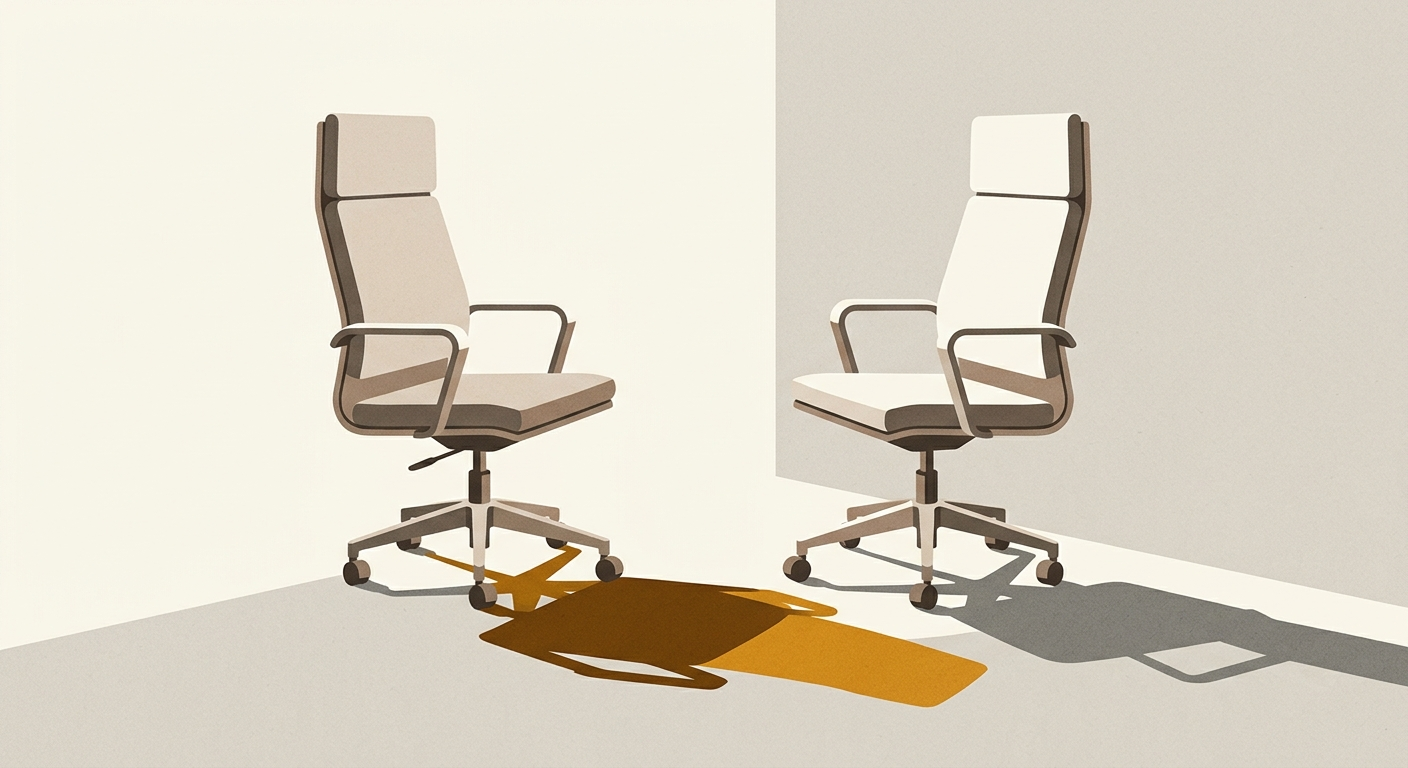
I once ran a business at Yahoo! where product, design and engineering all reported to me. Around 750 people. A $3B P&L.
At the time that was considered a slightly odd shape for a job. Not wrong exactly, but not your typical pattern.
The norm was to split those responsibilities apart, ONE Chief Product Officer and ONE Chief Technology Officer. And a standing meeting between them where the actual decisions and direction got made.
That pattern is about to reverse. Not because either of them is learning the other’s job.
What a year inside Meta actually looked like
I read a piece recently about what changed inside Meta over the past year, told by someone who ran a large part of it.
Almost everyone I saw discussing it took the same thing away: AI is collapsing roles into each other. Fewer people, doing more jobs.
That is not what it describes. In fact, I think it describes nearly the opposite.
The merge they tried, and reversed
Meta ran the experiment everyone assumes is coming. They had product managers shipping production code. And they backed it out, and said so plainly. Where they landed instead is that a product manager builds enough to show you what they mean, and then an engineer builds the thing that actually goes out. Quite a difference actually.
The same happened across the other functions. Design and data science handed off the repetitive parts and held on to the parts that have to be exactly right. Nobody absorbed anybody. A designer is still there because someone has to make a video player feel different from the one your competitor built, and that is not a job with a correct answer you can go and request.
Product takes a problem from nothing to a defined one. The specialists take it from defined to right.
So at the level of an individual job, AI did not merge anything. It removed the routine middle, and the two expert ends moved further apart than they were before.
What actually got cheap
Now look at what disappeared, because this is the part I think people are skipping.
The organization got flatter. Fewer layers, fewer product managers, smaller teams shipping more. And the thing changed is the coordination cost.
That is not a small observation. Coordination was most of the job. Anyone who has run a large product organization knows the shape of it: negotiating for a slice of someone else’s surface, sequencing your work around three other teams, compromising through every stakeholder until the thing you shipped is the thing everyone could live with.
I think that reading is right as far as it goes. I also think it has a consequence for the org chart that nobody drew, and it runs in the opposite direction to everything above.
Why the top runs the other way
Ask yourself what a separate Chief Product Officer and Chief Technology Officer are actually for.
Strategy, yes. Standards, hiring, the long-range bets. Real work.
But a great deal of what those two roles do, day to day, is negotiate with each other. Whose priorities win this quarter. What gets sequenced behind what. Whether the platform investment or the customer-facing work goes first. Who absorbs the cost of the thing that slipped. Two organizations with different incentives, goals even, and two executives whose job it is to reconcile them in a room.
They existed, in large part, to negotiate with each other.
If coordination is the thing AI just made cheap, then the individual roles split, because what is left at each end is expertise that does not delegate sideways. And the executive roles merge, because what those two chairs were built to do is the exact thing that stopped being expensive.
Same cause. Opposite directions.
The part I had wrong
When I held both halves, I thought the hard part was going to be technical depth. Whether I could hold my own with the engineering organization.
That was not the hard part, and I would tell anyone considering the shape of that job the same thing. The hard part was refusing to let product priorities and technology priorities become two separate conversations that then had to be reconciled. Because if they are two conversations, you are back to negotiating, and it does not matter that both sides report to the same person.
The value of holding both was never that I could do both jobs. It was that there was no negotiation to have.
I did not have language for that at the time. I do now, and it took reading someone else describe it, to realize it.
What I would watch for
Not job titles. Titles will lag this by years, and the first companies to do it will do it without naming it.
Watch for the standing meeting. The weekly one between product leadership and engineering leadership where sequencing gets settled. If that meeting is getting shorter, or getting cancelled, or quietly turning into a status update, something structural is happening underneath it and the org chart has not caught up yet.
If your product and technology leaders stopped needing to negotiate, what would you still need both of them for?